Wall Stone for Retaining Walls and Landscape Construction: Choosing Materials for Strength, Drainage, and Appearance
Retaining walls and structural landscape features do much more than create visual appeal—they solve elevation challenges, improve drainage, manage erosion, and increase usable outdoor space. Whether used in residential developments, commercial properties, road projects, or large-scale landscape construction, retaining walls depend heavily on selecting the right materials from the ground up.
How the Right Wall Stone Supports Structural Stability and Long-Term Landscape Performance
Wall stone remains one of the most widely used materials in these projects because it combines structural performance with natural aesthetics. When properly selected and installed, wall stone systems can withstand environmental pressures while creating attractive and functional outdoor spaces.
Why Wall Stone Matters in Structural Landscaping
Retaining walls are constantly exposed to pressure from surrounding soil, water, and changing weather conditions. Poor material selection can lead to shifting, cracking, or wall failure over time.
Wall stone provides several important benefits:
- Structural support for elevation changes
- Erosion control on slopes and hillsides
- Improved drainage when paired with proper backfill materials
- Increased usable space on uneven properties
- Natural visual appeal for landscaping projects
For larger projects such as commercial developments, subdivision construction, and roadway improvements, selecting the proper wall stone and supporting materials is essential for long-term performance.
Types of Wall Stone and Their Applications
Different wall stone products serve different purposes depending on project goals, wall height, and appearance preferences.
Natural Wall Stone
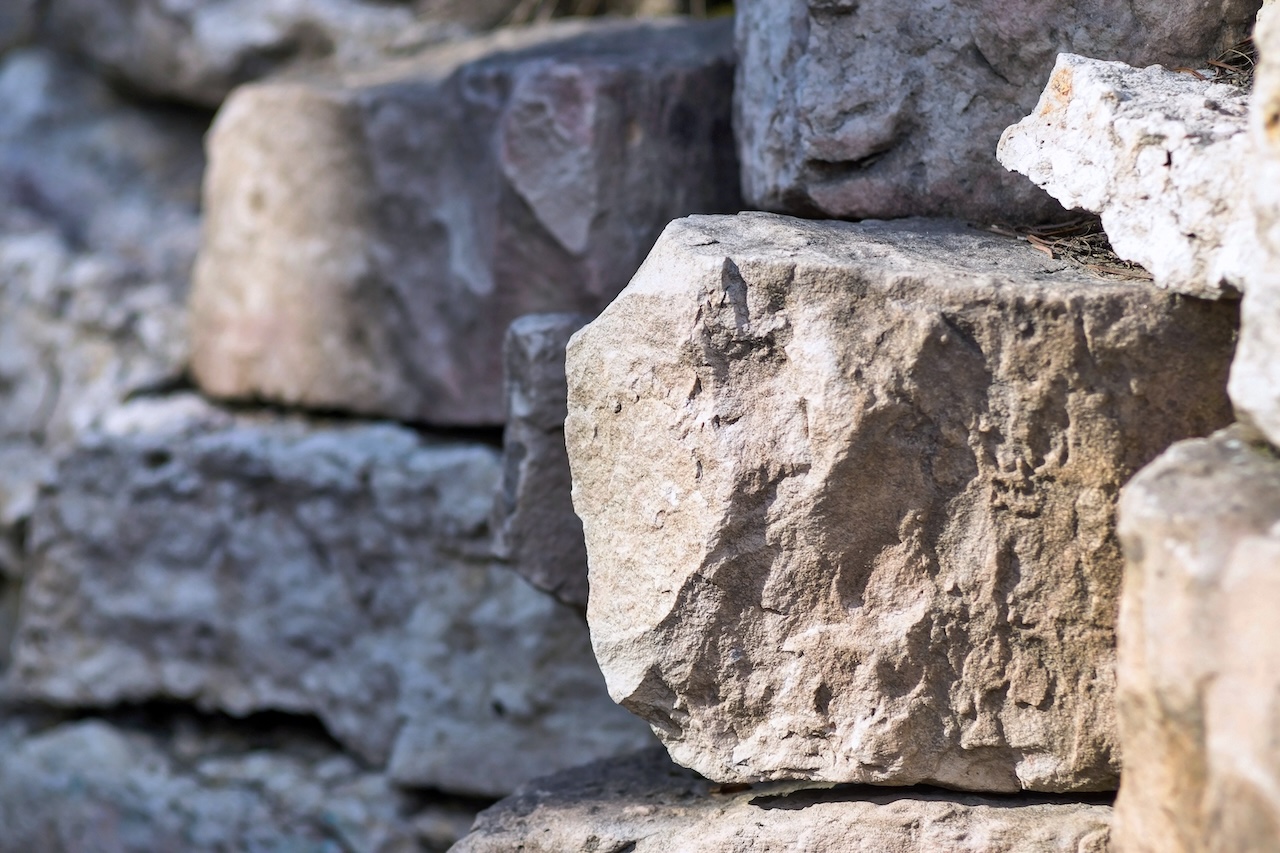
Natural wall stone provides a more irregular, organic appearance that blends well into landscape settings. These stones are often used for:
- Garden retaining walls
- Decorative landscape features
- Terraced planting areas
- Natural-looking slope stabilization projects
Because of their varying shapes and textures, natural stone walls create a rustic appearance while still providing strong structural support.
Dimensional Wall Stone
Dimensional stone products are more uniform in size and shape, making installation easier and creating cleaner finished lines.
Common applications include:
- Commercial retaining walls
- Structured hardscape projects
- Outdoor living spaces
- Large-scale landscape installations
Uniform sizing can speed installation and create more predictable structural performance in larger projects.
Granite Wall Stone
Granite is often selected when durability is a priority. Its dense composition makes it highly resistant to weathering, erosion, and freeze-thaw cycles.
Granite is frequently used for:
- Structural retaining walls
- Steps and stair systems
- Commercial landscaping projects
- High-traffic outdoor environments
Its long lifespan makes granite a popular choice for projects designed for decades of use.
Drainage: The Hidden Component Behind Successful Walls
One of the biggest causes of retaining wall failure is poor drainage. Water buildup behind a wall creates hydrostatic pressure that can eventually compromise structural stability.
Proper drainage systems work alongside wall stone to protect the structure.
Critical drainage components include:
- Drainage stone behind the wall system
- Perforated drainage pipes at the base
- Filter fabric to reduce soil migration
- Proper grading to direct water away from structures
Without these supporting materials, even properly installed walls may experience movement or premature failure.
Base Preparation for Long-Term Stability
Retaining walls are only as strong as the foundation beneath them. Proper base preparation helps prevent settlement and ensures the wall remains level over time.
Typical base systems often include:
- Compacted gravel for load distribution
- Crushed aggregate for structural support
- Stone dust for leveling applications
- Drainage materials for water management
A well-built foundation reduces shifting and helps maintain wall alignment under changing environmental conditions.
Bulk Materials for Large Projects
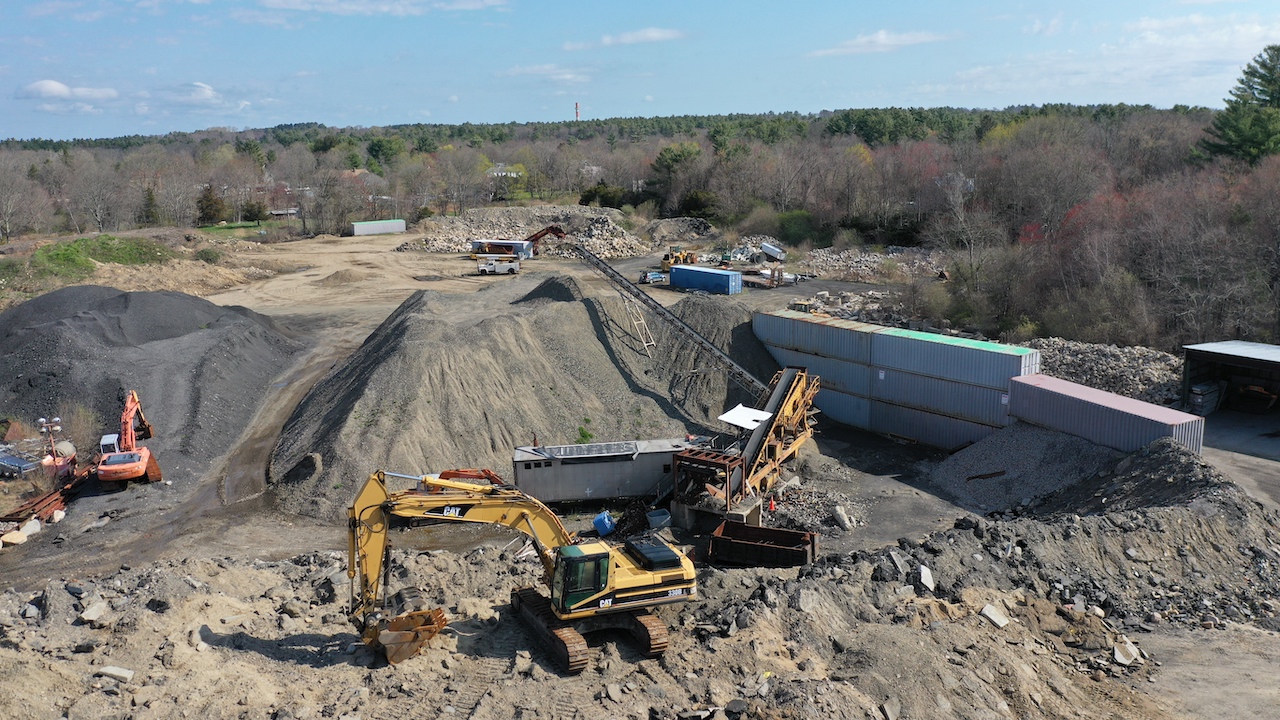
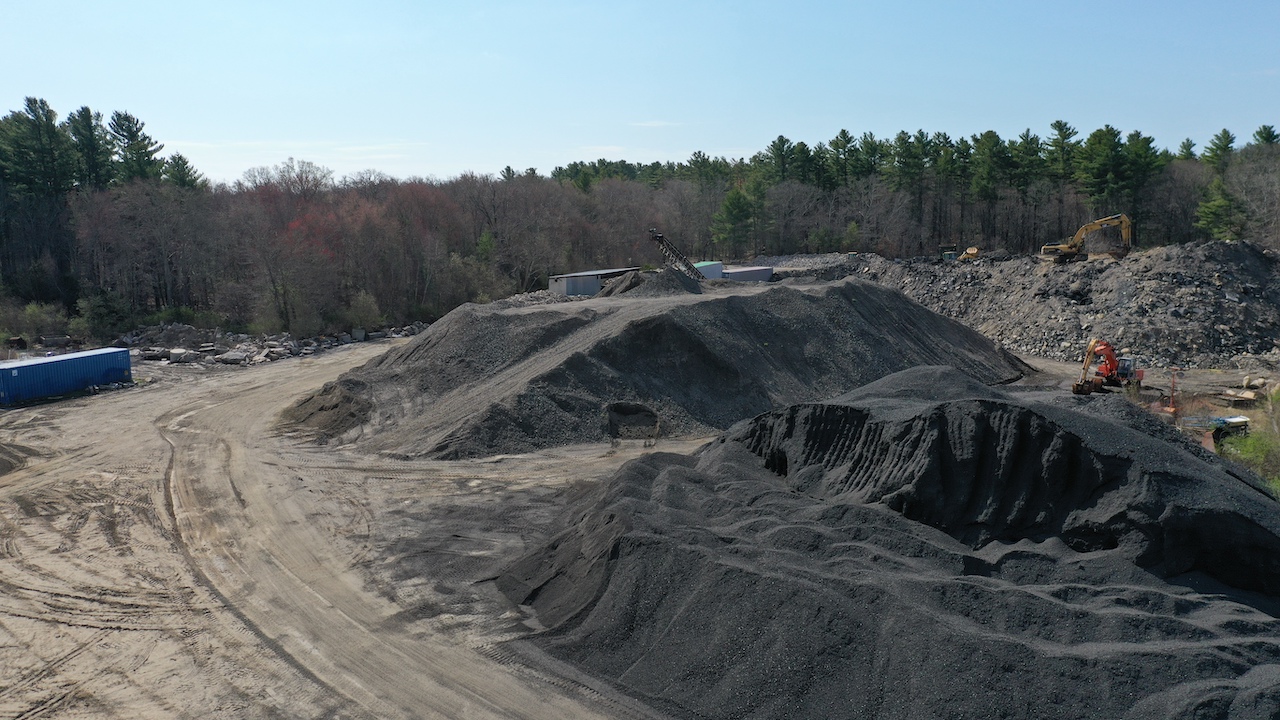
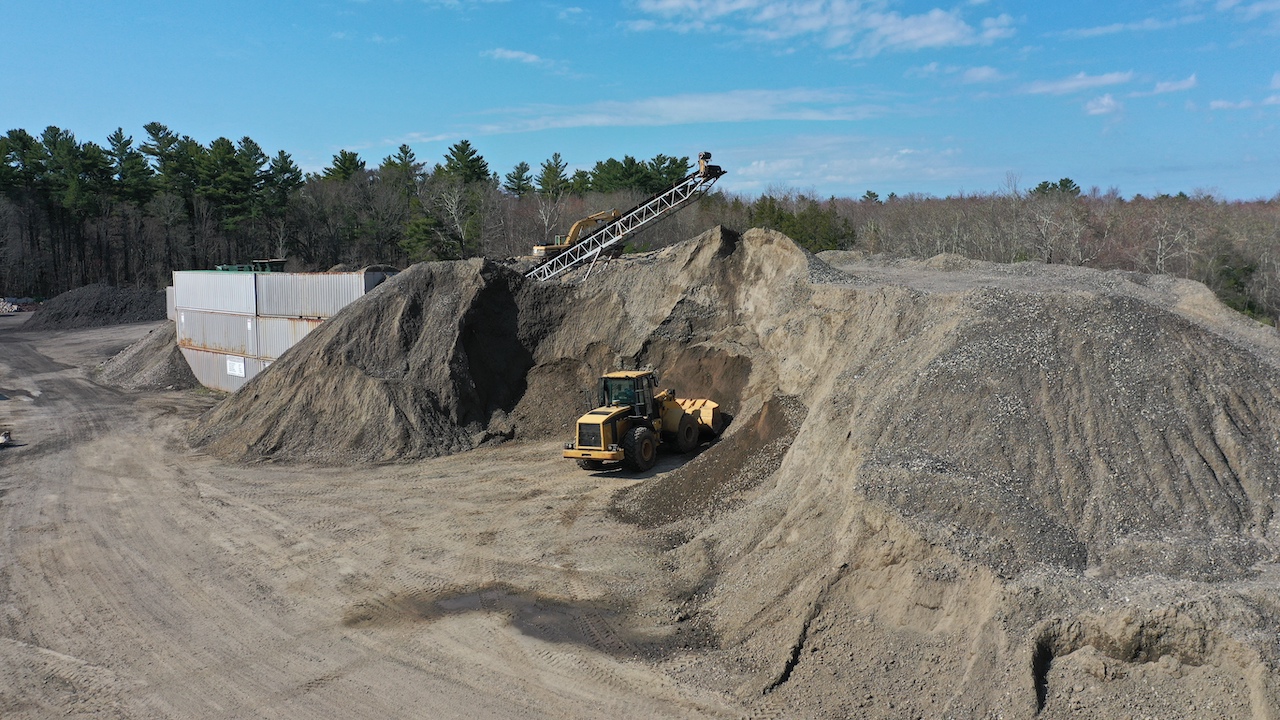
Retaining wall construction often requires substantial quantities of material. Large landscape installations, commercial developments, and infrastructure projects benefit from bulk supply because it improves consistency and project efficiency.
Bulk material supply provides advantages such as:
- Consistent material quality across large job sites
- Reduced downtime from multiple deliveries
- Lower material costs at scale
- Faster project completion timelines
For contractors and large property projects, bulk delivery or pickup options make it easier to manage material needs efficiently.
Applications Beyond Retaining Walls
Wall stone is not limited to retaining walls alone. It is commonly used in many structural and decorative landscape projects, including:
- Stone steps and stair systems
- Raised planting beds
- Outdoor seating walls
- Property borders and edging
- Entry features and decorative hardscapes
These applications combine structural function with visual appeal while improving overall site usability.
Final Thoughts
Wall stone remains one of the most versatile materials in landscape construction because it delivers both strength and appearance. From retaining walls and slope stabilization to decorative hardscapes and site development, choosing the right wall stone—and pairing it with proper drainage and base materials—creates installations built to last.
For large-scale projects, sourcing materials in bulk helps maintain consistency, improve efficiency, and keep construction moving from start to finish.